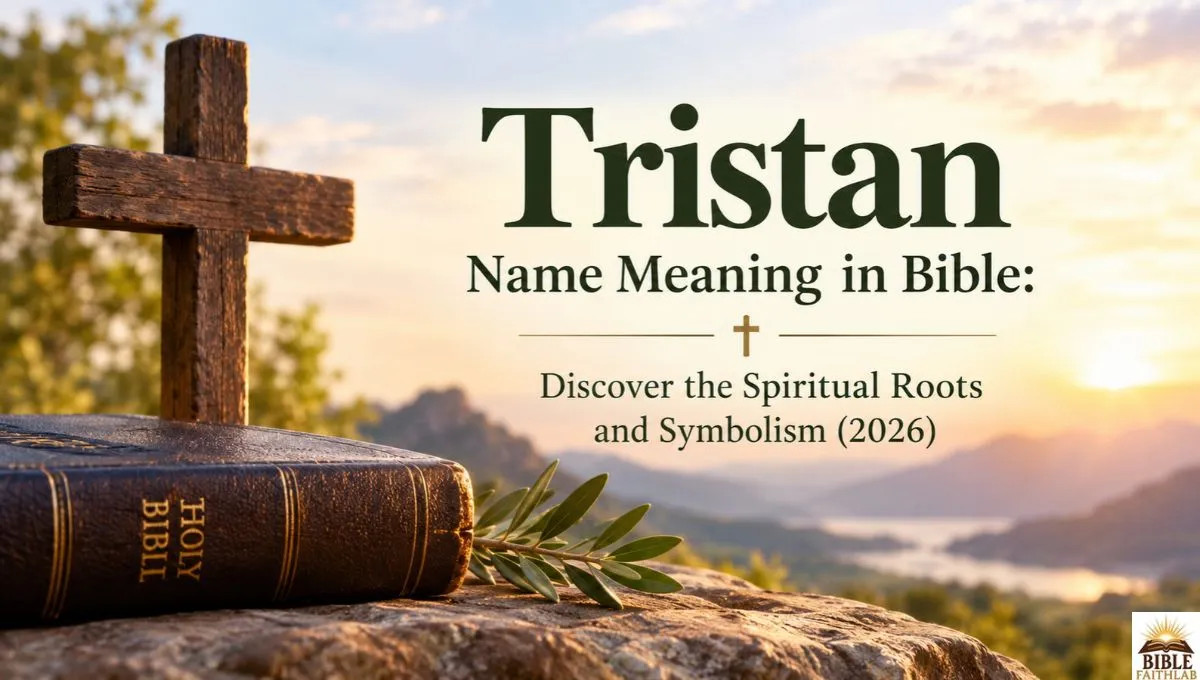
The Tristan Name Meaning in the Bible explores the spiritual symbolism and Christian values associated with this distinctive name.
Although Tristan is not mentioned directly in the Bible, its traditional association with sorrow connects to biblical themes of faith, courage, perseverance, and hope. From a Christian perspective, Tristan can symbolize strength during difficult seasons.
Scripture reminds believers that challenges do not define their lives, as God offers comfort, guidance, and renewed hope through every trial.
Understanding Tristan’s historical origins and spiritual significance provides meaningful insights for parents considering this name for their baby. Tristan reflects faith, resilience, and trust in God through life’s challenges.
Tristan Name Meaning Bible
Tristan has no direct biblical meaning. The name does not appear in the Old or New Testament, and it has no Hebrew or Greek root.
Its commonly cited meanings, “tumult” and “sorrowful,” come from Celtic and Old French sources. Christians who like the name usually connect it to Scripture’s themes of endurance and hope.
What Does the Name Tristan Mean?
Etymology and Historical Origins of Tristan
Most name scholars trace Tristan to the Pictish name Drust (also Drest), with Drustan as its diminutive form. Welsh sources spell it Drystan or Trystan. The root is often glossed as “noise” or “tumult,” though that is uncertain.
The “sorrow” meaning arrived later. When the name entered 12th-century French tales, it was likely reshaped by the Old French word triste, meaning “sad.” That is why many sources list both meanings side by side.
Tristan Pronunciation and Common Nicknames
Tristan is pronounced TRIS-tən, with stress on the first syllable. Common spelling variants include Tristen, Tristin, Triston, and the older Tristram. Nicknames are usually short: Tris, Trist or Tristy.
Read Also: Biblical Meaning of the Name Hailey: Origin, Spiritual Significance & Christian Meaning (2026)
Is Tristan Mentioned in the Bible?
No. A search through the Hebrew Bible, the Greek Septuagint and the New Testament turns up no Tristan. The Bible’s personal names come from Hebrew, Aramaic and Greek, while Tristan belongs to the medieval Celtic and French world.
You may see websites claiming a “biblical” Tristan or a Hebrew translation such as “of the sea” or “triumphant.” Those claims have no textual support, so treat them with caution.
Spiritual Significance of the Name Tristan
Christian Symbolism and Faith Connections
Because the name is not scriptural, its Christian significance is symbolic, not doctrinal. Believers who value it tend to read “sorrow” through verses like Psalm 34:18, which says God is near to the brokenhearted, and Matthew 5:4, which promises comfort to those who mourn.
Transformation Through Trials and Sorrow
Scripture rarely treats pain as pointless. Paul describes a chain in Romans 5:3-4: suffering builds perseverance, perseverance builds character, and character builds hope.
A parent who chooses Tristan on these grounds is borrowing that pattern, not claiming the name itself is inspired.
Tristan in Biblical History and Tradition
No biblical figure carries the name, so there is no “Tristan of the Bible.” What exists is a thematic parallel. Job lost nearly everything and kept wrestling with God.
Hannah prayed through years of grief and was heard. Joseph endured betrayal and later saw God’s purpose in it.
These stories echo what the name suggests. They don’t prove a connection.
The Origin of Tristan in Celtic and Christian Culture
A 6th-century inscribed stone near Fowey in Cornwall reads Drustanus, a Latinized form of the name, and is often linked to the legend.
The name also belonged to Drostan, a 7th-century saint who worked among the Picts, which gives it a real Christian history even without Scripture.
The legend of Tristan and Iseult then made the name famous across medieval Europe. Later tales made Tristan a knight of King Arthur’s court.
Biblical Names Similar to Tristan
Some Bible names carry meanings that overlap with “sorrow,” and one is far closer than Tristan will ever be.
Other Bible Names That Also Mean Sorrow
- Jabez: his mother named him in pain (1 Chronicles 4:9), and he prayed for blessing.
- Ben-Oni: “son of my sorrow,” the name Rachel gave her newborn before Jacob renamed him Benjamin (Genesis 35:18).
- Mara: meaning “bitter,” the name Naomi took in her grief (Ruth 1:20).
Notice that Ben-Oni’s name was changed. Scripture often reframes sorrowful names rather than keeping them.
Why Parents Choose Tristan: A Biblical Perspective

Most parents choose Tristan for its sound and its romantic, literary feel. Others like the quiet hope behind a name tied to hardship.
Is Tristan a Good Christian Name?
Yes, it can be. Nothing in Scripture forbids it, and Christians have used it for centuries. If a meaningful faith link matters to you, pair it with a biblical middle name such as Samuel, Caleb or Elijah.
Read Also: Biblical Meaning of the Name Alice: Origin, Spiritual Significance & Christian Meaning (2026)
Tristan Name Meaning in Hebrew
The Hebrew Meaning and Origin of the Name Tristan
Tristan has no Hebrew meaning because it isn’t a Hebrew name. It can be spelled phonetically in Hebrew letters, but that is transliteration, not translation. Hebrew words for grief, such as etzev or ka’ev, are thematic matches only.
Tristan Name Symbolism and Interpretation in Hebrew Culture
Hebrew naming traditions often tie a name to a circumstance or a hope. Since Tristan sits outside that tradition, any “Hebrew symbolism” is modern interpretation, useful for reflection but not for scholarship.
What Are Good Hebrew Alternatives to Tristan?
If you want a true Hebrew name with similar strength, consider:
- Ethan: firm, enduring
- Caleb: wholehearted
- Asher: happy, blessed
- Gideon: one who cuts down, a warrior
Tristan Name Meaning in Greek
Tristan isn’t Greek either. The nearest Greek New Testament idea is lypē (grief), which Paul contrasts with joy in 2 Corinthians 7:10. Again, that is a theme, not a root.
The actual Latin link, tristis, is also only a probable influence on the name’s later spelling and meaning.
The Cultural and Religious Impact of the Name Tristan
Tristan became a fixture in European literature, from medieval romance to opera. In more recent decades it climbed in popularity in the United States, helped along by film and television characters.
Tristan in Legends vs. Christian Truth
The legend celebrates a doomed love born of a magic potion, and that story is not a Christian one. Christian teaching places love within faithfulness and covenant, and sorrow within God’s care. You can enjoy the legend as literature while grounding a child’s name in what you believe.
What the Bible Teaches About Names and Identity
Names carry weight in Scripture. God changed Abram to Abraham, Jacob to Israel and Saul to Paul as their calling shifted.
Yet the Bible also says identity comes from God, not from a name’s dictionary meaning. A child named Tristan is not defined by “sorrow.”
Biblical Themes Connected to the Name Tristan
God Is Near in Sorrow
Psalm 34:18 describes a God close to those with broken hearts, not distant from them.
Pain Produces Growth
James 1:2-4 presents trials as a path to steadfastness and maturity.
Compassion Is Born Through Suffering
Paul writes that comfort received from God equips us to comfort others (2 Corinthians 1:3-4).
Jesus Himself Wept
John 11:35 records Jesus weeping at the grave of Lazarus. Isaiah 53:3 calls the coming Messiah a man of sorrows. Grief is not beneath God.
Mourning Turns to Dancing
Psalm 30:11 celebrates God turning mourning into dancing. It is the same movement from sadness to joy that makes the name’s “sorrow” meaning easier to carry.
Biblical Interpretations in Dreams or Real Life
Some people search for the name’s meaning after a dream. The Bible does record meaningful dreams, such as Joseph’s and Daniel’s, but it gives no code for decoding names that appear in them.
A better approach is prayer, wise counsel, and Scripture, rather than assigning meaning to the name alone.
Read Also: 15 Biblical Meanings of Flickering Lights: Spiritual Signs and Insights
Practical Lessons and Faith Insights

Bible Verses That Reflect Tristan’s Meaning
- Psalm 30:5: weeping may last the night, but joy comes with the morning
- Psalm 34:18: the Lord is near to the brokenhearted
- Romans 5:3-4: suffering leads to perseverance, character and hope
- 2 Corinthians 7:10: godly sorrow leads to repentance without regret
- Isaiah 40:31: those who wait on the Lord renew their strength
How to Apply Tristan’s Spiritual Meaning in Daily Life
- Bring honest grief to God in prayer, as the psalmists did.
- Lean on your church or community when you’re struggling.
- Look for chances to comfort someone going through what you’ve survived.
- Remember that a hard season is not the final chapter.
Frequently Asked Questions
What is the meaning of the name Tristan in Hebrew, and how is it pronounced?
Tristan has no Hebrew meaning, as it is a Celtic name. It is pronounced TRIS-tən.
What does the name Tristan mean in the Bible?
It has no direct biblical meaning, since the name isn’t in Scripture. Christians link it symbolically to sorrow turning into hope.
What is the meaning of Tristan in Greek?
Tristan isn’t Greek. The closest related idea is the Latin tristis (“sad”), which likely influenced its later form.
What is the origin and historical meaning of the name Tristan?
It likely comes from the Pictish name Drust, often glossed as “tumult,” and was later linked to French triste (“sad”).
Does the name Tristan have a spiritual meaning in Christianity?
Not by origin, but many Christians see it as a reminder that sorrow can lead to endurance and hope.
Is the name Tristan mentioned anywhere in the Bible?
No. It does not appear in the Hebrew Bible, the Septuagint or the New Testament.
Conclusion
The Tristan name meaning in Bible searches leads to a clear answer: the name is Celtic and medieval, not scriptural.
Its meanings of “tumult” and “sorrowful” come from Pictish roots and French influence. Any biblical link is a reflection, not a fact.
That reflection can still be worthwhile. Scripture consistently shows God near to the grieving and bringing joy out of hard seasons.
If Tristan is the name you love, you can choose it with a clear conscience and pair it with a biblical middle name that carries the faith meaning you want.

M Uzair is a Christian content writer at Bible Faith Lab with 4 years of experience researching Bible meanings, prayers, and Christian teachings. He aims to make biblical concepts easy to understand and inspire readers to grow in faith through Scripture-based content.









1 thought on “Tristan Name Meaning in Bible: Discover the Spiritual Roots and Symbolism (2026)”